Custom Search
|
Custom Search
|
 |
|
"People will not look forward to posterity who never look backward to their ancestors."
Quotes
Shops Ireland Bunús na Gaeilge Did You Know? Himself/Herself Write to Us Readers Write.. Links/Link to Us Advertise with us Awards & Testimonials
|
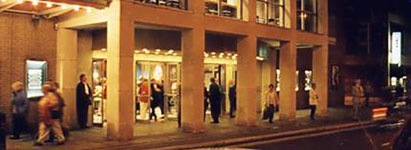
Irish Landmarks:The Abbey Theatre "On Saturday, January 26, 1907, I was lecturing in Aberdeen, and when my lecture was over I was given a telegram which said, `Play great success.' It had been sent from Dublin after the second act of `The Playboy of the Western World,' then being performed for the first time. After one in the morning, my host brought to my bedroom this second telegram, `Audience broke up in disorder at the word shift.' I knew no more until I got the Dublin papers on my way from Belfast to Dublin on Tuesday morning. On the Monday night no words of the play had been heard. About forty young men had sat in the front seats of the pit, and stamped and shouted and blown trumpets from the rise to the fall of the curtain. On the Tuesday night also the forty young men were there. They wished to silence what they considered a slander upon Ireland's womanhood. Irish women would never sleep under the same roof with a young man without a chaperone, nor admire a murderer, nor use a word like `shift'; nor could any one recognise the country men and women of Davis and Kickham in these poetical, violent, grotesque persons, who used the name of God so freely, and spoke of all things that hit their fancy. . . . the frenzy that would have silenced his (Synge's) master-work was, like most violent things, artificial, that defence of virtue by those who have but little . . . As I stood there watching, knowing well that I saw the dissolution of a school of patriotism that held sway over my youth, Synge came and stood beside me, and said, `A young doctor has just told me that he can hardly keep himself from jumping on to a seat, and pointing out in that howling mob those whom he is treating for venereal disease.' " Meantime, back in history, while The Playboy of the Western World was shaping Irish drama as it is today, the Abbey Theater was struggling to survive. Then, in 1924, the new Free State came to its rescue with an annual subsidy. It was with this first subsidy that the Abbey was able to open the Peacock — a small studio space. Combined, both the Abbey and the Peacock constitute The National Theatre of Ireland; also, the government continues to support it with an annual grant from An Chomhairle Ealaion -The Arts Council of Ireland. Through the years, the Abbey and the Peacock produced a stream of now classic plays from literary luminaries such as George Bernard Shaw, Sean O'Casey, Padraic Colum and many others. Dubliners and visitors alike loved the world-famous landmark, but tragedy struck on July 17th, 1951. Fire broke out and the original buildings were destroyed. However, the Irish government once again came to the rescue and pledged to re-house the theatres in a contemporary facility on the same site. Today, theater-goers to both the Abbey and the Peacock can look forward to entertainment as dynamic and enriching as it has always been; and, while it must have been magical to sit in the old theatres and imagine a Synge or Shaw watching from the wings, there's still a sense of wonder when one realizes the magnitude of the gift we were given when the Irish National Theater Society was founded and the Abbey Theatre was born.
Sources for Images and Content:
|
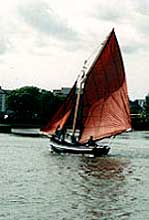 The Galway Hooker The Galway Hooker
This unique vessel, with its distinctive curved lines and bright red sails, originated in the village of Claddagh. During the 19th century, hookers supported a significant fishing industry and also carried goods, livestock and fuel. Seán Rainey is remembered for building the last of the original boats, the Truelight, for Martin Oliver who was to become the last king of the Claddagh; as king, he was entitled to white sails on his boat. Since the mid seventies, many of the old sailing craft which were on the verge of extinction have been lovingly restored and new ones have been built. During the summer months they can be seen at festivals such a Cruinniú na mBád - the Gathering of the Boats - in Kinvara.
|
||||||||||
|
||||||||||||
| All contents copyright © 2001 through 2011 inclusive - all rights reserved. March 4, 2011 |
Rollover button Images: Wedding LaRose, Kids Reading & Kitchen Apples and Tea from All Posters prints. The information provided on this site is offered as-is, without warranty. This site's owners, operators, authors and partners disclaim any and all liability from the information provided herein. Any trademarks or registered trademarks on this site are the property of their respective owners. |
This Web Site Bashed, Kicked & Glued together by Russ Haggerty. |
||||||||||



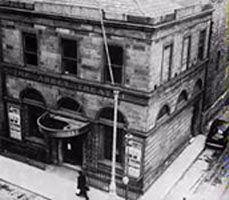 Led by W.B. Yeats, a group of prominent figures in Irish literature came together with the intention of championing, promoting and preserving the works of Irish-born playwrights. It's thanks to Yeats, Lady Augusta Gregory, J.M. Synge and George Russell that many of the most memorable plays of all time are still being enjoyed by theater-goers all over the world.